Dave Ramsey Envelope System Explained: A Step-by-Step Guide to Cash Budgeting That Works
Dave Ramsey Envelope System Explained: A Step-by-Step Guide to Cash Budgeting That Works
Research from MIT’s Sloan School found that people spend 12% to 18% more when they pay with cards instead of cash, and the gap is widest on everyday purchases. The Dave Ramsey envelope system exists to close that gap with a piece of paper and a stack of bills. This guide explains exactly how the system works, how to set it up in one afternoon, and what to do when real life breaks the rules.
What the Dave Ramsey Envelope System Is and Why It Works
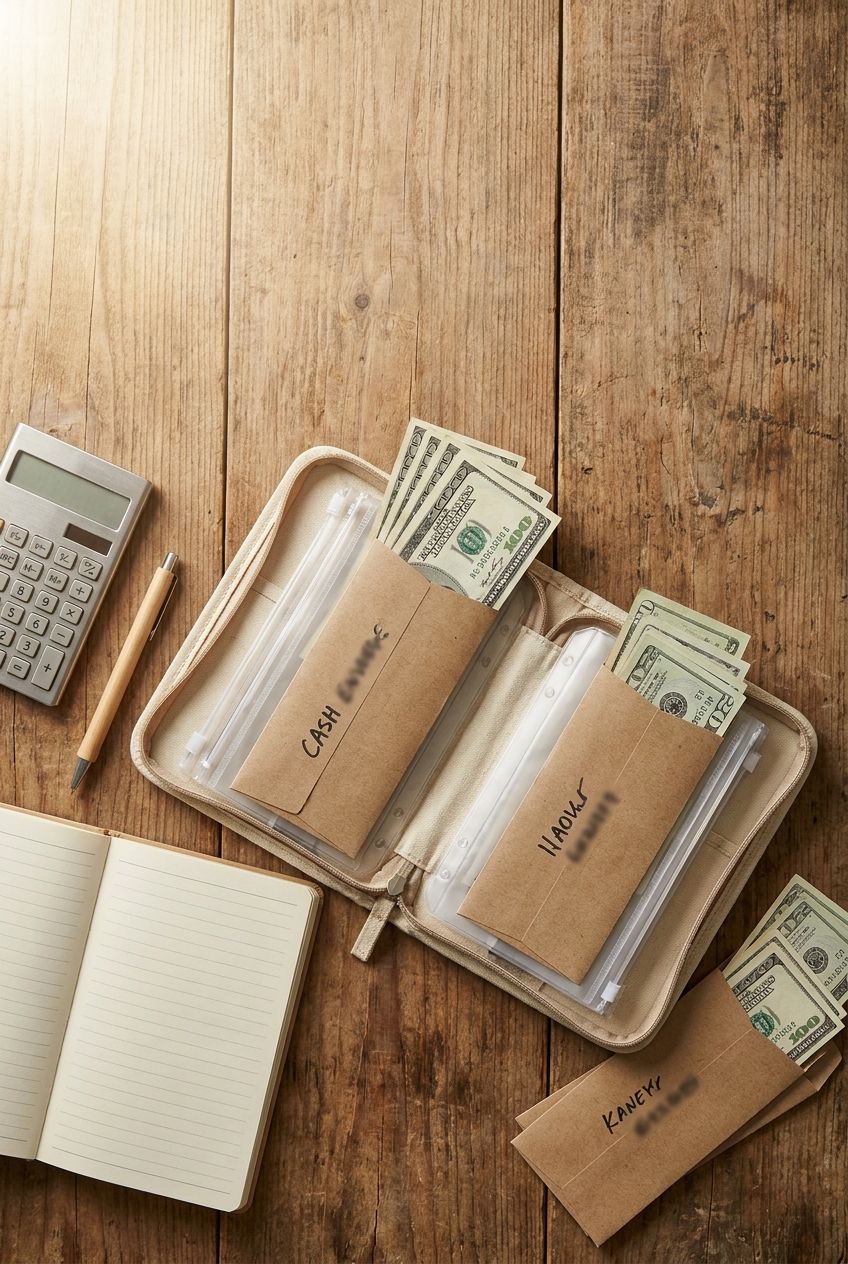
The envelope system is a cash-based budgeting method. You decide how much money each spending category gets for the month, withdraw that amount in cash, and put it in a labeled envelope. When an envelope is empty, you stop spending in that category until next month. That’s the whole rule.
Ramsey popularized it through his Financial Peace University course and his EveryDollar budgeting app, but the method itself is much older. Families used labeled tins and jars for rent, food, and fuel long before banks issued debit cards.
Why does it work? Two reasons.
It makes spending physical
Handing over four $20 bills at a grocery store stings in a way that tapping a phone does not. Behavioral economists call this the “pain of paying.” Cash triggers it. Cards mute it.
It creates a hard stop
A budget on a spreadsheet is a suggestion. An empty envelope is a wall. You can’t overspend $40 on dining out when there’s $0 in the dining envelope and your card is at home.
One important note: the system is not a magic fix for a low income. If your essential bills exceed your paycheck, envelopes will reveal the problem but won’t solve it. We’ll cover that scenario later in this guide.
How to Set Up the Envelope System in One Afternoon (7 Steps)
You need about 90 minutes, your last two months of bank statements, a calculator, and a pack of envelopes (a 100-count box of standard #10 envelopes costs about $6 at Walmart or Staples). Here is the sequence.
- Calculate your monthly take-home pay. Use the amount that actually lands in your account, after taxes and payroll deductions. If your income varies, use the lowest month from the past six. But what if your pay is irregular? Budget only the money you already have in hand, and treat each new paycheck as the start of a mini-budget.
- List your fixed bills. Rent or mortgage, insurance, car payment, phone, internet, utilities. These are paid electronically and stay out of the envelope system. Success looks like a single list with a total, for example $2,150.
- Pull two months of statements and total your variable spending. Highlight groceries, gas, dining out, entertainment, clothing, and personal care. Average each category across the two months.
- Assign every remaining dollar a job. Take-home pay minus fixed bills minus savings and debt payments equals your envelope money. Ramsey calls this a zero-based budget: income minus outgo equals zero.
- Label your envelopes. Write the category name and monthly amount on the front. Start with 5 to 7 envelopes, not 15.
- Withdraw the cash. Ask the bank teller for a mix of $20s, $10s, and $5s, plus some $1s. Large bills make it hard to spend exact amounts.
- Divide the cash into the envelopes and store them somewhere safe. A zippered pouch or a cash-envelope wallet works. Success looks like every envelope holding its exact amount before you leave the house.
Do this once and the monthly routine shrinks to about 20 minutes: refill envelopes after each paycheck and review what’s left.
Which Categories Belong in Envelopes (and Which Don’t)
The most common setup error is trying to put everything in cash. Don’t. The envelope system is built for variable spending: money you decide to spend in small, frequent amounts.

Good candidates for envelopes
- Groceries: typically $350 to $900 a month, depending on household size. The USDA’s moderate-cost plan for a family of four runs roughly $1,000 to $1,300 monthly as of recent years.
- Dining out and takeout: the category most people underestimate by 30% or more.
- Gas: useful if you’re prone to filling up on impulse.
- Entertainment and hobbies: movies, games, streaming add-ons, craft supplies.
- Clothing and shoes: including kids’ clothes.
- Personal care: haircuts, toiletries, gym day passes.
- Spending money: a no-questions-asked allowance, often $50 to $150 per adult.
Keep these out of envelopes
- Rent, mortgage, and insurance: pay these online so they’re never late.
- Utilities and phone bills: autopay avoids late fees of $25 to $50.
- Debt payments: send them directly to the lender.
- Savings and emergency fund contributions: automate a transfer on payday.
But what if my gas is part of a fixed commute? Then use a gas envelope anyway. Gas is the exception that works well in both camps, because the amount fluctuates and a cap keeps it honest.
How Much Should Go in Each Envelope? A Worked Example
Abstract advice is useless here, so let’s build a real budget. Imagine a two-adult household with no kids and a take-home income of $4,800 per month.
- Fixed bills (paid electronically): $2,150 (rent $1,450, car payment $300, insurance $180, phone $110, internet $60, utilities $50 average)
- Savings and debt: $900 ($400 to a student loan, $300 to emergency fund, $200 to a sinking fund for car repairs)
- Remaining for envelopes: $1,750
Now divide that $1,750:
- Groceries: $650
- Gas: $220
- Dining out: $200
- Entertainment: $120
- Clothing: $100
- Personal care: $80
- Spending money (two adults): $200 ($100 each)
- Buffer (the “oops” envelope): $180
That totals $1,750. Zero left over means every dollar has an assignment.
Notice the buffer. Ramsey doesn’t use that exact word, but experienced users add a small slush envelope for things like a school fundraiser or a birthday gift. Without it, one surprise forces you to raid another category and the system loses its discipline.
If the numbers feel tight on the first pass, trim dining out and entertainment first. Cutting groceries below your real needs only leads to a mid-month panic.
Cash Envelopes vs. Digital Budgeting Apps: Which Fits You?
Cash isn’t the only way to run an envelope system. Several apps copy the idea digitally. Here is how the main options compare.

| Method | Cost | Overspending Protection | Convenience | Best For |
|---|---|---|---|---|
| Physical cash envelopes | About $6 for envelopes; no fees | Highest: you literally can’t spend what’s gone | Low: requires ATM trips and carrying cash | Chronic overspenders and first-time budgeters |
| EveryDollar (Ramsey) | Free basic; Premium about $79.99/year | Medium: tracks and alerts, but doesn’t block spending | High: bank sync in Premium, mobile app | Ramsey followers who want digital tracking |
| Goodbudget | Free (10 envelopes); Plus about $10/month or $80/year | Medium: manual entry builds awareness | Medium: syncs across devices for couples | Couples who want envelopes without carrying cash |
| YNAB (You Need A Budget) | About $14.99/month or $109/year | Medium-High: reallocates money as you spend | High: bank sync, strong reporting | People with irregular income and bigger financial goals |
My recommendation by use-case: If you’ve failed at budgeting three times before, start with physical cash for 90 days. If you’re a couple who rarely carry cash, use Goodbudget. If you earn variable income, YNAB handles it best. If you’re already in Ramsey’s Baby Steps, EveryDollar keeps your plan in one place.
The Hybrid Approach: Keeping the Discipline Without the Hassle
Plenty of people can’t live on pure cash. Online orders, rideshares, and subscription charges don’t accept a $20 bill. A hybrid version keeps the benefit of hard limits while accepting how modern spending works.
Use cash only where overspending happens
Most people overspend in just two or three categories. Check your last two statements. If dining out and impulse shopping account for your biggest leaks, put only those into cash and leave everything else on autopay.
Use a separate debit card per category
Some credit unions let you open multiple checking accounts for free. Open one for groceries, fund it with $650 on payday, and use its debit card only for the store. When the balance hits zero, the card declines. This replicates the hard stop without the cash.
Try a prepaid card for a single category
Prepaid cards like Bluebird (American Express) can be loaded with a set amount and used like a debit card. Check the fee schedule first. Some cards charge monthly maintenance fees of $3 to $10, which defeats the point.
The key principle: any hybrid system must have a hard ceiling. If you can overdraw, you’ve built a tracker, not an envelope system. A tracker is useful, but it won’t stop the $60 Friday night DoorDash order the way an empty envelope will.
7 Common Mistakes That Make the Envelope System Fail (and Fixes)
Most people who quit the system in the first two months make the same handful of errors. Here are the ones that matter most.
- Making the budget too tight. Cutting groceries to $300 for a family of four sets you up to fail by day 18. Fix: Base amounts on your actual two-month average, then trim 5% to 10%, not 40%.
- Using too many envelopes. Fifteen envelopes become a chore. Fix: Start with 5 to 7 and add categories only when you notice a specific leak.
- Carrying all envelopes everywhere. A lost wallet with $1,750 in it is a bad day. Fix: Take only the envelope you need for that trip and leave the rest locked at home.
- Borrowing between envelopes without a rule. Raiding the clothing envelope for groceries every month means your grocery budget is wrong. Fix: Allow one transfer per month, and write it down. If you transfer more than twice, recalculate the budget.
- Using cash for fixed bills. Mailing cash for rent invites loss, theft, and no paper trail. Fix: Pay recurring bills electronically from your checking account.
- Skipping the weekly check-in. If you don’t look at the envelopes until day 25, you’ve lost your chance to adjust. Fix: Set a 10-minute Sunday review on your phone calendar.
- Quitting after one bad month. The first month almost always has errors. Fix: Commit to three full months before judging whether the system works for you.
The pattern behind all seven: people treat the first budget as final. It isn’t. Expect to adjust amounts by $20 to $75 per category during months one through three.
What to Do When an Envelope Runs Out Mid-Month
This is the moment the system gets tested. It will happen. Here is exactly how to handle it, in order.
- Stop spending in that category. That is the rule and the whole point. No card, no “just this once.”
- Check the days remaining. If there are 4 days left and you need groceries, the situation is very different from 17 days left.
- Look at your other envelopes. If the entertainment envelope still has $60 and you have no plans, you can move $40 to groceries. Write down the transfer.
- Use what’s already in your kitchen. Pantry challenges (meals built entirely from existing food) can stretch a week of eating with a $15 top-up for milk and produce.
- Diagnose the cause after the month ends. Was the budget unrealistic, or was it overspending? If you run out by day 20 three months in a row, raise the amount. If you run out because of three unplanned dinners out, the budget is fine and your habits need work.
Ramsey’s guidance leans strict: no borrowing, no cards, and adjust next month. That’s good for people breaking a debt habit. If you have kids and the fridge is empty, though, feed them first and figure out the transfer afterward. The system serves your family, not the other way around.
Answering the Big Objections: “What If…” Scenarios
Skeptics raise real concerns. Here are the five I hear most, with direct answers.
“What about the credit card rewards I’d lose?”
A card paying 2% cash back on $1,750 of monthly spending earns you $35. If using a card causes you to overspend by even 5% ($87), you lose. Ramsey’s argument is that most people’s behavior erases the rewards. If you pay in full every month and never overspend, you may not need envelopes at all.
“What if I don’t carry cash anymore?”
Use the hybrid approach: separate checking accounts or a prepaid card for your two biggest problem categories. You keep the hard limit without the ATM runs.
“What if my partner won’t participate?”
Give each person a personal spending envelope of equal size, such as $100 each, and agree on shared categories together. Fight over the budget less by making their personal money truly theirs.
“What if I live paycheck to paycheck and have nothing to allocate?”
Run the zero-based budget first. If fixed bills exceed your income, envelopes will not help until you cut costs or raise income. Look at your biggest fixed bill (usually housing or a car payment) and consider the largest lever, not the latte.
“What if cash gets stolen or lost?”
It can. Keep the bulk of the cash in a home safe or locked drawer and carry only what you need for that trip. A $50 fireproof lockbox from Amazon is cheap insurance against losing $1,000 or more in cash.
How the Envelope System Fits Dave Ramsey’s 7 Baby Steps
The envelope system is a tool inside a larger plan. Ramsey’s Baby Steps are a sequence, and envelopes help you reach each one faster.
- Baby Step 1: Save a $1,000 starter emergency fund. Envelope leftovers feed this directly.
- Baby Step 2: Pay off all non-mortgage debt using the debt snowball (smallest balance first). Money freed by tight envelopes becomes extra debt payments.
- Baby Step 3: Build a full emergency fund of 3 to 6 months of expenses. For a household spending $4,200 monthly, that’s $12,600 to $25,200.
- Baby Steps 4 to 7: Invest 15% of income for retirement, save for kids’ college, pay off the mortgage early, and build wealth and give.
Envelopes matter most in Steps 1 and 2. During those phases, you’re squeezing the budget to free up cash, and the physical limit keeps you from leaking money. Many people drop envelopes once they reach Step 4 and shift to a looser tracking method. That’s fine. The system is a training tool, not a life sentence.
A realistic timeline: a household with $20,000 in debt and $600 of extra monthly cash flow from tightened spending needs roughly 33 months to clear that debt, before counting any interest savings from snowball momentum.
Your First Month: Do This Before Next Payday
Here is the one action to take today. Open your banking app, export or screenshot the last 60 days of transactions, and total your spending in just three categories: groceries, dining out, and gas. Write each number on a sticky note.
Then, on your next payday, withdraw the average of each category minus 10%, drop it into three labeled envelopes, and put your card in a drawer for those purchases. Run that experiment for 30 days. Whatever is left in each envelope on the last day is your proof of concept, and your first real savings.