
Sinking Funds: Setup Guide + Categories + Tracker Printable (Stop Getting Blindsided by Predictable Expenses)
Your car registration, your dog’s annual vet visit, and your December gift spending are not emergencies. Yet millions of households treat them like emergencies, then drain savings or reach for a credit card at an average 22% APR. Sinking funds fix this, and this guide gives you the complete setup, the categories worth funding, and a printable tracker layout you can build in ten minutes.
What Sinking Funds Are and Why They Beat a Single Savings Account
A sinking fund is money you set aside in small, regular amounts for a specific expense you know is coming. The name comes from old corporate finance, where companies “sank” money into a reserve to pay off debt on a known date. For households, the idea is simpler: divide a big, scheduled cost by the number of months until it’s due, then save that slice monthly.
Here’s the math. A $1,200 annual car insurance premium hits your account as one painful charge. Saved as a sinking fund, it’s $100 per month. The bill arrives, the money is waiting, and nothing else in your budget flexes.
Sinking Fund vs. Emergency Fund
An emergency fund covers surprises: job loss, a burst pipe, an ER visit. A sinking fund covers certainties: you know the expense exists, you just don’t know exactly when your cash flow will feel it. Mixing the two is the root of most budget failures. If your emergency fund pays for a $600 brake job that you could have predicted, it’s no longer there for the layoff.
The standard guidance is 3 to 6 months of essential expenses in an emergency fund. Sinking funds sit on top of that, not inside it.
The Core Benefit: Converting Spikes Into Flat Lines
Without sinking funds, your spending looks like a heartbeat monitor: flat for weeks, then a spike in the month your property tax, annual software renewals, and a wedding gift collide. With them, every month costs roughly the same. That predictability is the entire point.
How to Set Up Sinking Funds in 5 Steps (Under 30 Minutes)
You need three things: your last 12 months of bank and card statements, a calculator, and a spreadsheet or the printable tracker described later. Follow these steps in order.
- Pull 12 months of statements and highlight irregular charges. Look for anything that isn’t monthly: annual fees, quarterly bills, seasonal spending. Success looks like a list of 8 to 20 items with amounts and dates. But what if you’ve only been banking for 6 months? Use what you have and add known costs from memory, such as last year’s tax bill or insurance renewal letters.
- Estimate each expense’s annual total. Round up to the nearest $10. If the cost is variable (car repairs, gifts), use the highest of the last two years, not the average. But what if you have no history? Use benchmarks: a common rule of thumb is 1% to 2% of a car’s value per year for maintenance and repairs.
- Divide by the months remaining until it’s due. A $480 expense due in 8 months is $60 per month. Not 12. Use months remaining, or your first deadline will be underfunded.
- Total the monthly amounts and compare to your budget. If the total exceeds what you can spare, don’t abandon the system. Rank the funds by deadline and fund the soonest ones first, then add the rest as income allows.
- Automate transfers for the day after payday. Set a recurring transfer to a separate account or bucket. Success looks like money moving without your involvement. But what if your income is irregular? Fund each category as a percentage of each paycheck instead of a fixed dollar amount. For example, 8% of every deposit.
The whole process takes 20 to 30 minutes the first time. After that, you revisit it once a year.
15 Sinking Fund Categories Worth Funding (With Typical Amounts)
Not every expense deserves its own fund. A good category is irregular, predictable, and large enough to hurt if it arrives unplanned. Below are 15 categories with realistic annual ranges for a U.S. household, so you can calibrate your own numbers.

Home and Vehicle
- Car maintenance and repairs: $800 to $1,500 per year (about $65 to $125 per month). Covers tires, brakes, oil changes, and surprise repairs.
- Vehicle registration and inspection: $50 to $300 per year, varies widely by state.
- Home maintenance: 1% of your home’s value per year is the standard rule. On a $350,000 home, that’s $3,500, or about $290 per month.
- Appliance replacement: $200 to $500 per year. A refrigerator replacement runs $1,000 to $2,500.
- Property tax or HOA dues: Whatever your annual bill is, divided by 12, if not escrowed.
Health and Family
- Medical out-of-pocket: Match your plan’s deductible or at least 25% of it. A $3,000 deductible suggests $750 per year as a starter fund.
- Dental and vision: $300 to $800 per year without coverage.
- Pet care: $500 to $1,200 per year for a dog (routine care, vaccines, boarding).
- Kids’ activities and school costs: $300 to $1,000 per year per child.
Life and Lifestyle
- Holidays and gifts: $500 to $1,500 per year. This is the most commonly underestimated category.
- Birthdays and celebrations: $200 to $600 per year.
- Travel and vacations: Set a target, such as $2,400 for a trip, and divide by months to departure.
- Annual subscriptions and memberships: Amazon Prime ($139), software licenses, warranties. Often $200 to $600 total.
- Insurance premiums billed annually or semiannually: Car, renter’s, or life insurance. Divide the bill by 12.
- Technology replacement: $200 to $400 per year toward a laptop or phone ($800 to $1,200 each).
You do not need all fifteen. Most households start with 5 to 8 and add more later.
Where to Keep Sinking Fund Money: Account Options Compared
Your fund is only as good as the container holding it. The wrong choice either tempts you to overspend or costs you interest. Here is how the three most common approaches compare, with a recommendation for each situation.
| Method | Typical Cost | Visibility | Interest Earned | Best For |
|---|---|---|---|---|
| One high-yield savings account (HYSA) with a spreadsheet tracking each category | $0 | Low, you must update the sheet | Highest, often 4% to 5% APY at online banks such as Ally or Marcus | People comfortable with spreadsheets and 6+ categories |
| Separate sub-accounts or buckets (Ally buckets, Capital One 360 savings goals) | $0 | High, each fund shows its own balance | High, same account rate | Most beginners; best balance of simplicity and returns |
| Cash envelopes | $0 to $15 for envelopes | Very high, you can see and touch it | None | People who overspend on cards; works for small, frequent categories like gifts |
Recommendation: If your bank offers named buckets, use them. They give you per-category visibility and interest with zero extra effort. Use envelopes only for categories under about $50 per month, since holding large cash sums carries theft and loss risk. Choose the single-account-plus-spreadsheet method if you already track money weekly and want maximum control.
Whatever you pick, keep the money in an FDIC-insured account (or NCUA-insured at a credit union), which protects up to $250,000 per depositor, per bank.
The Printable Sinking Fund Tracker: Exactly What to Put on It
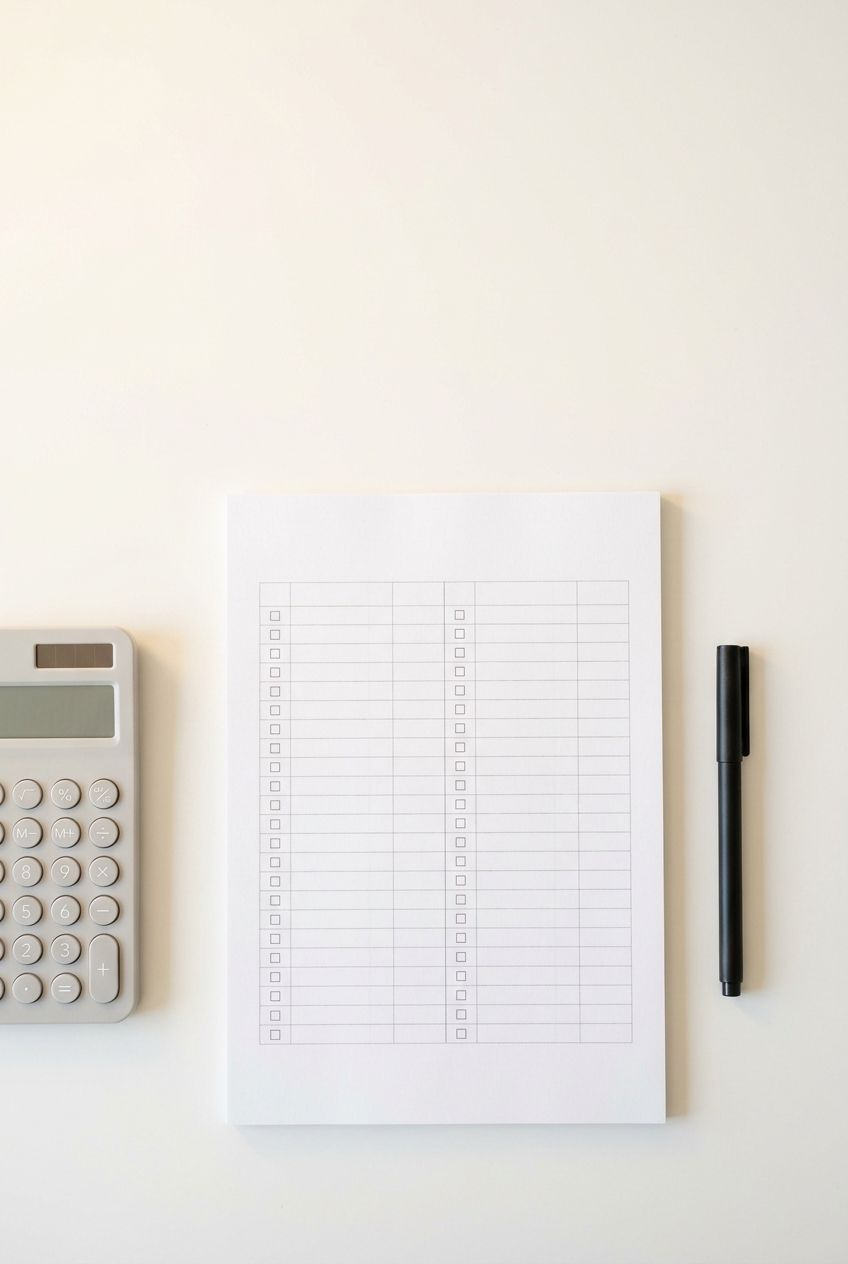
A tracker turns a vague plan into a visible one. You can build a one-page printable in any spreadsheet or word processor in about ten minutes. Here is the layout that works.

Columns to Include
- Fund name: “Car repairs,” “Holidays,” and so on.
- Target amount: The total you need by the due date.
- Due date: The month the money is needed.
- Monthly contribution: Target divided by months remaining.
- Current balance: Updated monthly.
- Percent funded: Balance divided by target. This is the number that motivates you.
- Notes: Space for adjustments, such as “insurance renewal increased $40.”
Layout and Print Tips
Set the page to landscape on US Letter (8.5 x 11 inches). Use 12 rows, one per fund, and a totals row at the bottom. Add a column of 12 small checkboxes (one per month) if you prefer to mark each contribution by hand. Print on 24 lb paper and slide it into a clear sheet protector so you can use a dry-erase marker.
But what if you’d rather skip the build? Both Google Sheets and Microsoft Excel offer free budget templates. Search “sinking fund tracker” in their template galleries and edit the categories to match your list. Whichever you choose, put the tracker where you’ll see it: on the fridge or open in a browser tab on payday.
How to Calculate Your Monthly Contribution (Worked Examples)
The formula never changes: target amount, divided by months until due, equals monthly contribution. Here are four worked examples so you can see how it handles different situations.
- Annual insurance premium: $1,320 due in 12 months. $1,320 divided by 12 is $110 per month.
- Holiday spending: $900 target, 7 months to go. $900 divided by 7 is about $129 per month. Round up to $130 so you finish with a small cushion.
- New laptop: $1,100 target, 10 months. $110 per month.
- Vacation: $2,400 target, 15 months. $160 per month.
Add them up: $110 + $130 + $110 + $160 = $510 per month. If that exceeds your capacity, extend the vacation timeline to 24 months, which drops its contribution to $100 and your total to $450.
Handling Variable Expenses
For costs that fluctuate, such as car repairs, build a ceiling and a floor. Fund to the ceiling for the first year, then reduce it if your actual spending stays below the floor for 12 months. Fund to your worst year, not your average. Averages are how people end up short.
Handling Mid-Year Starts
If a bill is due in 3 months and you have $0 saved, you can’t fully fund it by the deadline without a large contribution. Cover the gap from your regular budget this one time, then start the fund immediately for next year’s cycle.
7 Common Sinking Fund Mistakes (and How to Avoid Them)
Most failed sinking fund systems die from the same few errors. Fix these in advance and you’ll avoid the majority of problems.

- Mistake 1: Creating too many funds. Twenty categories means twenty things to track, and you will quit by month three. Start with your five most expensive irregular costs and add a new fund only when one proves necessary.
- Mistake 2: Underestimating the target. People use last year’s cheapest number. Use the highest of the past two years and add 5% to 10% for price increases, since annual insurance and vet costs have risen faster than general inflation in recent years.
- Mistake 3: Raiding funds for non-matching expenses. Borrowing from “Holidays” to cover a car repair defeats the purpose. If you must transfer, log it on the tracker and repay within 60 days.
- Mistake 4: Skipping automation. Manual transfers get forgotten. Schedule them for one to two days after payday so the money moves before you can spend it.
- Mistake 5: Never revisiting the numbers. Costs change. Review every fund each January, or whenever a bill arrives higher than expected.
- Mistake 6: Letting leftovers sit idle. When a fund overshoots, redirect the excess. Move it to your emergency fund, a goal, or a debt payoff, rather than letting it drift into general spending.
- Mistake 7: Funding sinking funds while carrying high-interest debt with no plan. More on this in the next section.
“What If I Can’t Afford This?” Answers to the 6 Most Common Objections
Sinking funds sound great until real life interferes. Here are the objections that come up most, answered directly.
“I have credit card debt. Should I still do this?”
Yes, but keep it lean. A card at 22% APR costs you far more than any savings account earns at 4% to 5%. Fund only the two or three expenses most likely to hit within 6 months, and put the rest toward debt. Without even a small buffer, every predictable bill just goes back on the card and the debt never shrinks.
“My income is irregular.”
Use percentages instead of fixed amounts. If your total sinking fund need is $450 per month on an average income of $4,500, that’s 10%. Move 10% of every deposit, large or small. In a lean month you save less, in a strong month more, and the system balances itself.
“I can only spare $50 per month.”
Then fund one thing. Pick the nearest-due or most painful expense and put the full $50 there. Finishing one fund builds the habit and the confidence to add a second.
“Isn’t this just a budget with extra steps?”
Partly, yes. A normal budget handles monthly costs. Sinking funds specifically handle the irregular ones that break a monthly budget. They are the missing piece, not a replacement.
“What if I overfund a category?”
You have a pleasant problem. Redirect the surplus to the next-most-urgent fund, your emergency fund, or debt. Surplus is never wasted, only reassigned.
“What if I forget to track it?”
Automation handles the saving. Tracking only matters for visibility, so a 5-minute check on the first of each month is enough.
A Real-World Example: Building a $565/Month System for a Family of Four
Abstract advice is easy to nod at and hard to apply, so here is a complete example. Imagine a household with two cars, a dog, two kids, and a mortgage with taxes in escrow. Their irregular costs, researched from 12 months of statements, look like this.

- Car maintenance (two cars): $1,500 per year. $125 per month.
- Home maintenance: $2,400 per year. $200 per month.
- Holidays and gifts: $1,200 per year. $100 per month.
- Dog care: $720 per year. $60 per month.
- Annual subscriptions: $360 per year. $30 per month.
- Kids’ activities: $600 per year. $50 per month.
Total: $565 per month. On a $6,500 take-home income, that’s about 8.7%. It looks large, but notice what it replaces: the $1,400 surprise car repair that used to go on a card, the $400 vet visit, and the December spending spree.
Their setup took 25 minutes: six buckets inside a single online savings account, six automatic transfers scheduled for the 2nd of each month, and a one-page tracker taped inside a kitchen cabinet. Their first test came in month four, when a $380 brake job arrived. The car fund held $500, the bill was paid without touching the budget, and no one felt it. That moment, more than any spreadsheet, is what converts people into lifelong sinking fund users.
Your Maintenance Routine: A 10-Minute Monthly and Annual Check-In
A sinking fund system needs light upkeep, not constant attention. Put these two recurring calendar events in place and the system runs for years.
Monthly (10 minutes, first of the month)
- Confirm every automatic transfer ran. Success is every bucket showing the expected increase.
- Update the tracker’s current balance and percent-funded columns.
- Log any withdrawals with the date and the bill they paid.
- Flag any fund that has fallen behind schedule and decide whether to raise the contribution or push back the target date.
Annual (30 minutes, every January)
- Re-pull last year’s actual spending in each category and compare it to what you funded.
- Adjust each target up or down, adding 5% to 10% where costs are rising.
- Retire completed funds and add new ones for upcoming goals.
- Reprint the tracker with the new year’s numbers.
If you get a raise, use the same moment to increase contributions. Directing even 20% of each raise into your funds raises your coverage without lowering your current lifestyle.
Start Today: Your First Sinking Fund in the Next 15 Minutes
Don’t wait to build the perfect system. Right now, open your banking app and look at the last twelve months of charges. Find the single irregular expense that caused the most stress, whether that’s a car repair, a vet bill, or holiday spending. Divide its annual cost by 12, open a savings bucket with that name, and schedule the automatic transfer for the day after your next payday.
That one transfer is your sinking fund system. Add the second fund next month, once the first has proven itself. Within a year, the expenses that used to feel like ambushes will just be bills you already paid.