Frugal Home Hacks + Frugal Meals for a Family: Cut $400+ a Month Without Misery
The average American family of four wastes roughly $1,500 a year on food it never eats, and another $300 or more on energy leaking through drafty windows and idle electronics. That is nearly $1,800 you can keep without cutting a single thing your family actually enjoys. This guide gives you the frugal home hacks and frugal meals for a family that deliver real savings, with exact prices, steps, and caveats.
Where a Family’s Money Actually Leaks (and the 3 Fixes That Matter Most)
Before you buy a single bulk bag of rice, know where the money goes. For a typical household, food runs $900 to $1,300 a month for four people (USDA moderate-cost plan, 2024), while utilities add $350 to $450. These two categories are where small habits produce big returns.

Most families try to save by clipping coupons for brand-name items. That is the wrong target. Coupons usually apply to processed foods, which are already the most expensive way to eat.
The three highest-impact moves are:
- Cut food waste. Households that plan meals and store food properly cut waste by 25 to 40 percent, worth $30 to $50 a month.
- Shift your protein. Replacing meat with beans, lentils, and eggs for three dinners a week saves $40 to $70 a month.
- Stop phantom energy use. Devices drawing power while off cost the average home $100 to $200 a year.
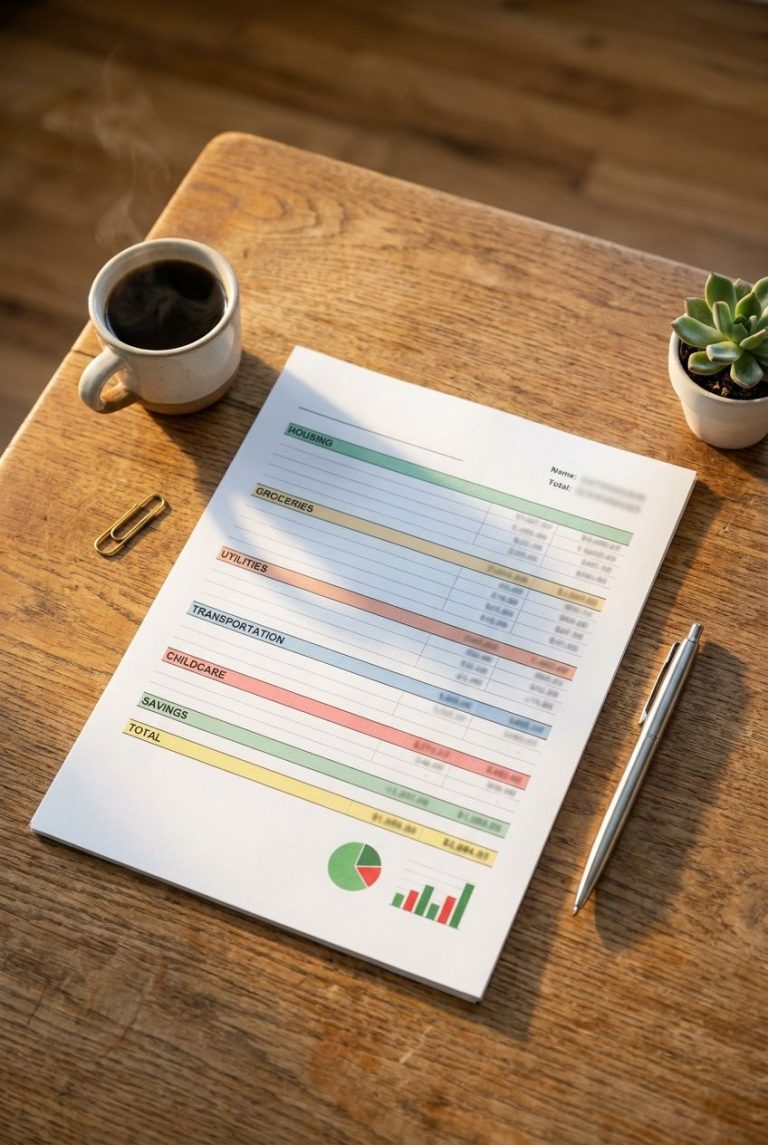
Start with a baseline. For one week, save every grocery receipt and photograph your electric bill. Write the weekly food total and monthly utility total on a sticky note on your fridge. Success looks like having two numbers you can beat.
But what if your bills vary wildly by season? Use a 12-month average from your utility’s online portal. Most providers (Duke Energy, PG&E, ConEd) show this under usage history.
How to Build a $75-Per-Week Grocery Plan for Four People
Seventy-five dollars a week ($325 a month) is aggressive but achievable in most regions using the USDA’s thrifty plan as a guide. It requires a system, not willpower.

Step 1: Shop Your Kitchen First (15 minutes)
Open every cupboard, the freezer, and the fridge. Write down everything you have. Plan the first meals around items that expire soonest. Success: a written list of 10 or more ingredients you already own.
Step 2: Plan Dinners Around Sales (20 minutes)
Check the weekly flyers for Aldi, Kroger, or Walmart using their apps. Pick the two cheapest proteins and the two cheapest vegetables, then build five dinners around them. Leave two nights for leftovers.
Step 3: Shop With a Hard Cap (45 minutes)
Use a calculator on your phone and track the running total as you shop. Pay with cash or a prepaid card if you tend to overspend. Success: the register total lands within $5 of your list estimate.
But what if you have picky eaters? Build meals around a base they already like, such as pasta or rice, and let kids choose one topping each. Involvement cuts rejection rates dramatically.
But what if your store prices are higher? Scale the target. The method matters more than the number: aim to beat your own baseline by 25 percent.
10 Frugal Meals for a Family That Cost Under $2 Per Serving
These recipes use pantry staples, scale easily, and rely on ingredients priced at Aldi, Walmart, or Costco in 2024. Costs are approximate per serving.
- Black bean and rice burrito bowls ($1.10): A 1-pound bag of dry black beans (about $1.50) plus 2 cups of rice makes dinner for four with leftovers.
- Lentil soup ($0.90): One pound of lentils ($1.80), an onion, two carrots, and canned tomatoes feed a family twice.
- Baked potato bar ($1.25): A 10-pound bag of potatoes costs $4 to $5. Top with broccoli, cheese, and a spoonful of sour cream.
- Egg fried rice ($0.80): Use day-old rice, 4 eggs, and frozen peas and carrots. Ready in 15 minutes.
- Pasta e fagioli ($1.00): Small pasta, canned white beans, and crushed tomatoes in one pot.
- Whole roasted chicken ($1.75): A 5-pound bird at $1.40 per pound serves dinner, then yields sandwiches and stock.
- Sheet-pan sausage and cabbage ($1.60): A head of cabbage costs about $2 and a pack of kielbasa $4.
- Homemade pizza ($1.20): Flour, yeast, and shredded mozzarella cost a third of delivery.
- Chili ($1.30): Ground beef stretched with two cans of beans and one can of tomatoes.
- Oatmeal with fruit ($0.45): A 42-ounce canister ($4) provides about 30 servings.
But what if you have no cooking confidence? Start with the burrito bowl. It has no technique beyond boiling and stirring.
Frugal Meal Prep: Cook Once, Eat Four Times in 2 Hours on Sunday
Meal prep, which simply means cooking in batches ahead of time, protects your budget on exhausted weeknights when takeout tempts. A family of four spends $60 to $80 on a single pizza-and-wings delivery night. A prepped dinner costs under $8.
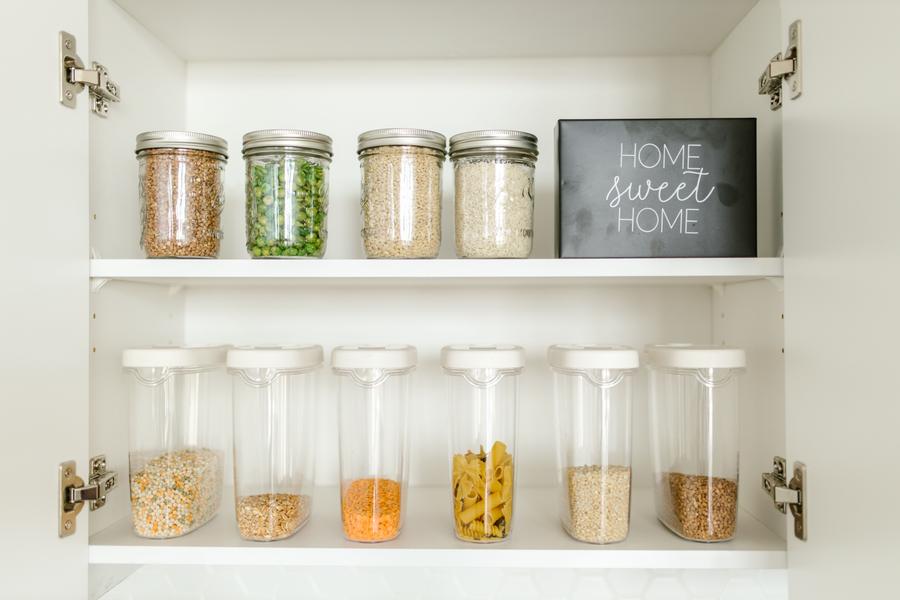
Here is a two-hour Sunday routine:
- Minute 0-15: Preheat the oven to 425 degrees F. Roast a whole chicken and a sheet pan of chopped potatoes and carrots.
- Minute 15-45: Cook two cups of dry rice and one pound of dry beans in a slow cooker or Instant Pot (about $60 to $90 for a 6-quart model).
- Minute 45-75: Brown two pounds of ground beef with onions. Divide half for chili, half for burritos.
- Minute 75-105: Chop raw vegetables for snacks and boil a dozen eggs.
- Minute 105-120: Portion everything into containers and label with masking tape and a marker.
Success looks like four dinners and a week of lunches ready by 3 p.m. Cooked rice and beans keep five days refrigerated, or three months frozen.
But what if your fridge is small? Freeze portions flat in zip-top bags. They stack like books and thaw in 30 minutes in a bowl of warm water.
8 Frugal Home Hacks That Cut Your Utility Bill by $40 to $90 a Month
Good frugal home hacks pay back fast. These are ranked by return on a small investment.
- Switch to LED bulbs: A 60-watt-equivalent LED costs $1.50 and uses 85 percent less energy. Replacing 20 bulbs saves roughly $100 a year.
- Set the thermostat 7 to 10 degrees lower for 8 hours: The Department of Energy estimates up to 10 percent annual heating and cooling savings. A $25 programmable thermostat handles this.
- Use a power strip: A $10 strip lets you cut power to TVs and game consoles with one switch.
- Wash clothes in cold water: Heating water accounts for about 90 percent of a washer’s energy use.
- Seal window drafts: A $6 roll of rope caulk or a $12 window insulation kit prevents significant heat loss.
- Install low-flow showerheads: A $15 model cuts water use by up to 40 percent.
- Clean your dryer vent: A clogged vent raises drying time and fire risk. A $12 brush kit fixes it.
- Air-dry dishes: Open the dishwasher after the final rinse cycle and skip the heated dry setting.
But what if you rent? Every item above is removable or landlord-friendly. Keep the old bulbs and showerhead to reinstall when you move.
Frugal Home Hacks for Everyday Supplies: Replace $30 of Monthly Purchases With $5 of Ingredients
Household consumables quietly drain $100 or more monthly. DIY versions work just as well for most tasks.
All-Purpose Cleaner (Cost: $0.50 per bottle)
Mix equal parts white vinegar and water in a spray bottle. Add the peels of one orange and let it sit for two weeks for scent. Do not use on granite or marble, because the acid etches stone.
Laundry Detergent (Cost: $0.04 per load)
Grate one bar of Fels-Naptha or Zote soap, then mix with 1 cup washing soda and 1 cup borax. Use 1 tablespoon per load. A batch makes about 64 loads for roughly $8, compared to $0.20 or more per load for name brands.
Reusable Swaps
Cut old T-shirts into 12-inch rags to replace paper towels. A family using two rolls a week at $2 each saves about $200 a year. Use cloth napkins from thrift stores at $0.25 each.
Success is measurable: track your next three cleaning-aisle trips and compare.
But what if homemade detergent leaves clothes stiff? Add half a cup of white vinegar to the rinse cycle. It softens fabric and removes residue.
Frugal Meals vs. Convenience Food: A Cost Comparison That Settles the Debate
Many families assume cooking from scratch is only slightly cheaper. The numbers say otherwise. Here is a comparison of three approaches for a dinner serving four.
| Option | Cost per Dinner (4 people) | Prep Time | Best For |
|---|---|---|---|
| Delivery pizza and wings | $45 to $65 | 5 minutes | Emergencies only |
| Frozen meals and boxed kits (Hamburger Helper, frozen lasagna) | $12 to $20 | 20 to 30 minutes | Tight schedules with a small buffer budget |
| Scratch frugal meals (beans, rice, eggs, chicken) | $4 to $8 | 30 to 45 minutes | Anyone aiming to save $300+ monthly |
| Batch-prepped freezer meals | $3 to $6 | 5 to 10 minutes (reheating) | Busy families who cannot cook nightly |
Recommendation: Use batch-prepped meals as your default, scratch cooking on weekends, and boxed kits as a backup. Reserve delivery for two nights a month at most. Swapping just eight delivery dinners a month for batch-prepped ones saves roughly $320.
7 Frugal Mistakes That Cost Families More Than They Save
Frugality done badly backfires. Watch for these traps.

- Buying in bulk without a plan. A 25-pound bag of flour is no bargain if half goes stale. Buy bulk only for items you already use weekly, and divide into airtight containers right away.
- Chasing the cheapest price per item, not per unit. Always compare the unit price (price per ounce) on the shelf tag. The larger box is not always cheaper.
- Skipping safety on food storage. Cooked leftovers must be refrigerated within two hours and eaten within four days. Wasting a food-poisoning week costs far more than a rotated meal plan.
- Driving across town for savings. If a store is 12 miles away, you burn $4 to $6 in gas and an hour of time. The deal must beat $10 in savings to justify the trip.
- Cutting every treat. Families who ban all fun spending burn out in weeks. Budget $20 a month for a treat so the plan survives.
- Ignoring repairs. A dripping faucet wastes up to 3,000 gallons a year. A $5 washer fixes it.
- Buying gadgets to save money. Do not buy a $200 air fryer unless you will use it weekly. Use what you own first.
If you catch one of these in your own habits, fix that one before adding anything new.
“But My Family Won’t Eat That” and Other Objections, Answered
Even a perfect plan stumbles on real-life friction. Here are the most common objections and workable responses.
“My kids refuse to eat beans or lentils.”
Blend lentils into pasta sauce or mix half-and-half with ground beef in tacos. Most kids never notice the swap. Introduce new foods alongside a familiar favorite and serve small portions of two tablespoons.
“We don’t have time to cook.”
You do not need to cook nightly. A two-hour Sunday session plus one 30-minute midweek cook covers the week. Slow cookers let you spend 10 minutes in the morning and eat at 6 p.m.
“Cheap food is unhealthy.”
Dry beans, oats, eggs, frozen vegetables, cabbage, carrots, and bananas are among the cheapest and most nutritious foods in any store. Frozen vegetables are picked and frozen at peak ripeness, often retaining more nutrients than week-old fresh produce.
“The savings feel too small to matter.”
Savings compound. Saving $15 a day equals $5,475 a year. Put that in a high-yield savings account at 4.5 percent APY and the interest alone pays for a month of groceries within two years.
“What if there is a family member with food allergies?”
Build the plan around safe staples (rice, potatoes, eggs, chicken, beans) and read labels on every packaged item. Store brands from Aldi and Kroger often undercut name brands on allergen-friendly products by 30 percent.
A 7-Day Frugal Meal Plan for a Family of Four (Under $80)
Copy this plan and adjust to local prices. It assumes you own basic seasonings, oil, and flour.

- Monday: Black bean and rice burrito bowls with shredded cabbage slaw.
- Tuesday: Baked potato bar with broccoli and cheese.
- Wednesday: Roast chicken with carrots and potatoes (save carcass for stock).
- Thursday: Chicken and rice soup using Wednesday’s leftovers and homemade stock.
- Friday: Homemade pizza night with a simple salad.
- Saturday: Chili with cornbread from a $1 mix.
- Sunday: Egg fried rice with frozen peas, plus leftover chili reheated for lunch.
Breakfasts are oatmeal or eggs at about $0.50 per person. Lunches are leftovers, peanut butter sandwiches, or soup. Snacks are popcorn kernels popped on the stove ($2 for a jar that lasts months), apples, and bananas at roughly $0.60 per pound.
Estimated weekly cost: $72 to $82, depending on your region. Track actual spending in a free app like Mint alternatives (Monarch, YNAB trial) or a simple notebook.
Your First 30 Days: A Week-by-Week Frugal Action Plan
Do not overhaul everything at once. Add one layer each week so the habits stick.
- Week 1: Record your baseline grocery and utility spending. Replace five bulbs with LEDs and plug your TV setup into a power strip.
- Week 2: Plan five dinners from the list above. Shop with a written list and hard cap. Cook one batch of beans and rice.
- Week 3: Do your first two-hour Sunday meal prep. Mix a batch of DIY all-purpose cleaner and swap paper towels for rags.
- Week 4: Lower your thermostat by 5 degrees overnight, seal one draft, and review your receipts against week 1.
By day 30, a family following this plan typically reports savings of $200 to $450. Take that number and move half of it into a separate savings account the same day it is saved. Open that account this week, name it “Frugal Wins,” and set an automatic transfer of $25 every Friday.